

7 Ways to Stop Food Waste in Commercial Sinks
Table of Contents
- Why Food Waste in Commercial Sinks Is a Plumbing Emergency Waiting to Happen
-
The 7 Ways to Stop Food Waste in Commercial Sinks Before It Clogs Your Pipes
- 1. Install Locking Drain Baskets That Staff Can't Remove
- 2. Pair Primary Baskets With Fine-Mesh Secondary Filters
- 3. Scrape Plates Into the Trash, Not the Sink
- 4. Use Pre-Rinse Spray Valves With Built-In Strainers
- 5. Schedule Daily Sink Flushing and Basket Cleaning
- 6. Track What Goes Down the Drain With a Waste Log
- 7. Train Staff on What Belongs in the Sink vs. the Compost Bin
- How to Prevent Grease Buildup in P-Traps and Grease Traps
- Choosing the Right Commercial Drain Strainer Materials for Your Kitchen
- The Real Cost of Clogged Drains: Plumbing Bills, Downtime, and Repairs
- Build a Sink-to-Disposal Workflow That Protects Your Plumbing Long Term
- Conclusion: Stop Food Waste at the Sink and Protect Your Bottom Line
- Frequently Asked Questions
Last Updated: September 6, 2026
Every commercial kitchen fights the same quiet battle: food waste in commercial sinks that turns into a plumbing emergency at the worst possible moment. Scraps, oils, and sediment build up inside P-traps and branch lines until water backs up during the dinner rush. At Guardian Drain Lock, we have spent over 20 years protecting commercial drains, and the most effective strategy is simple: stop solids before they enter the pipes.
The 7 strategies that follow have been refined through decades of work with restaurants, hospitals, and schools. They cover physical barriers, staff habits, and tracking systems. But first, here is what most guides get wrong: they focus on inventory management and composting while ignoring the physical hardware sitting in the sink basin. A locking strainer does more for your plumbing than any waste audit ever will.
Why Food Waste in Commercial Sinks Is a Plumbing Emergency Waiting to Happen
Food waste in commercial sinks is the leading cause of slow drains, recurring clogs, and expensive emergency calls in foodservice operations. When staff rinse plates or dump prep scraps, water carries solids into the drainage system where they settle in P-traps and accumulate along pipe walls, narrowing the pipe diameter and creating a sticky surface that captures FOG (Fats, Oils, and Grease).
The problem compounds quickly. A single handful of rice or pasta can swell inside a trap, while coffee grounds and eggshells form a dense sediment that requires professional cabling to remove. Commercial kitchens generate significant organic waste daily, so minor scraps add up to a major blockage within weeks.
This is why the Environmental Protection Agency recommends source reduction as the first step in any food waste management plan: less waste entering the drain means less waste to manage downstream EPA food waste management hierarchy. The physical protection of your plumbing infrastructure must pair with those broader waste reduction goals.
The 7 Ways to Stop Food Waste in Commercial Sinks Before It Clogs Your Pipes
A multi-layer defense is the only reliable approach. No single basket, spray valve, or training session will protect your pipes alone. The most effective kitchens combine physical barriers with daily habits and staff accountability.
1. Install Locking Drain Baskets That Staff Can't Remove
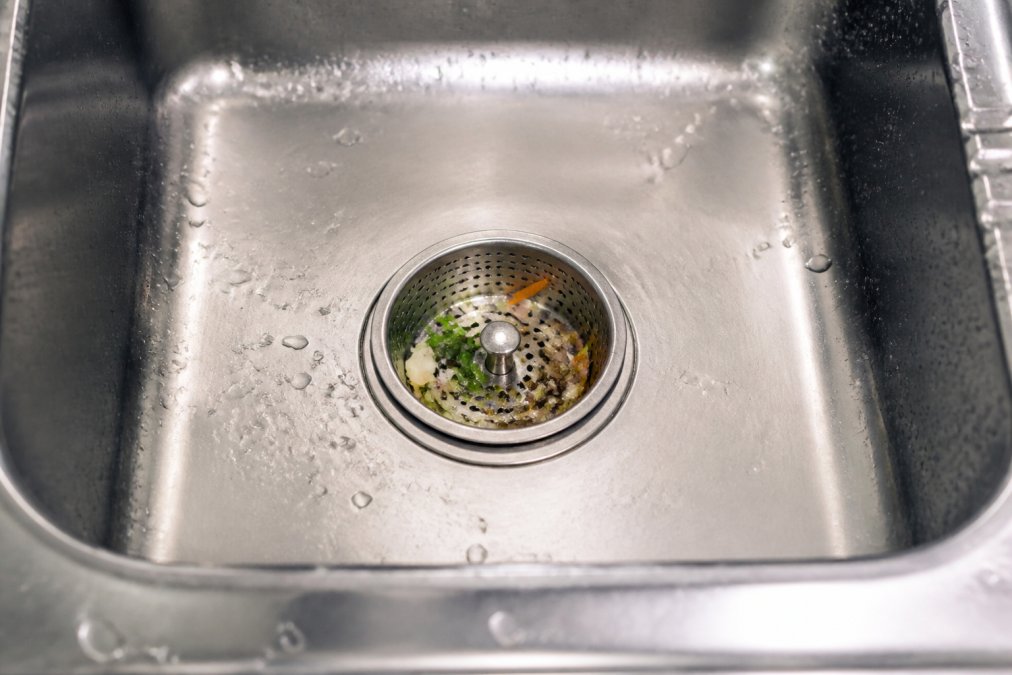
Standard drop-in strainers fail because anyone can lift them out and forget to replace them. A locking drain basket secures the strainer to the sink basin with a tamper-resistant bolt. The Guardian Drain-Lock Flat, priced at $57.24, is designed for commercial floor sinks where strainers are easily removed, requiring a Tamper Proof Torx Wrench to prevent staff from bypassing the protection.

The key advantage is consistency. When the strainer cannot be removed, every scrap stays above the drain where it belongs, preventing debris from ever reaching your P-traps. For facilities with multiple drains, the pre-assembled design means installation takes minutes per unit.
2. Pair Primary Baskets With Fine-Mesh Secondary Filters
A single strainer catches large pieces but lets smaller particles slip through. The solution is a two-tier system. The DUO 2-in-1 Floor Sink Basket, available in 9.5-inch round and 8.5-inch square versions for $42.37 each, uses alternating strainer sizes: the top basket filters larger scraps, while the bottom catches finer sediment.
This design also allows staff to extract solids without removing the primary basket from the sink. Multiple finger pulls make retrieval quick, and the glass-filled polypropylene construction will not float in a full sink.
3. Scrape Plates Into the Trash, Not the Sink
The most basic habit is also the most overlooked. Before any dish hits the wash sink, staff should scrape solid food waste into a trash bin or compost container. A dedicated scraping station with a garbage disposal or compost bin next to the dish return makes the habit automatic.
Many kitchens skip this step during peak hours to save time, but the seconds saved create hours of plumbing downtime later. Post a simple sign above the pre-rinse station: "Scrape first, then rinse."
4. Use Pre-Rinse Spray Valves With Built-In Strainers
Pre-rinse spray valves are essential for removing stuck food, but they also blast debris directly into the drain. Valves with built-in strainers capture those particles at the point of entry, and they are easy to empty into the trash throughout the day.
When selecting a spray valve, look for a removable strainer basket that staff can access without tools. The strainer should be cleaned every few hours during service, not just at closing.
5. Schedule Daily Sink Flushing and Basket Cleaning
Even with the best barriers, some residue will accumulate. A daily flushing routine prevents that residue from hardening into a blockage. At the end of each shift, fill each sink with hot water and release it all at once to create a surge that pushes loosened debris through the lines, then follow with a slow flow of hot water to dissolve remaining FOG.
Basket cleaning should happen every time the basket is half full, not just at closing. Assign a specific person to this task each shift so it never gets skipped.
6. Track What Goes Down the Drain With a Waste Log
You cannot manage what you do not measure. A simple waste log sheet posted near the dish area lets staff record the type and approximate volume of food waste they scrape each day. Over a week, patterns emerge: too much prep waste, over-portioning, or spoilage from poor inventory management.
The log also identifies problem behaviors. If certain shifts consistently report more waste, retraining can be targeted where it matters. Combine the log with a weekly review to track progress.
7. Train Staff on What Belongs in the Sink vs. the Compost Bin
Clear rules eliminate guesswork. Staff need to know which items go in the trash, which go in the compost bin, and which can safely rinse down the drain. A laminated reference card posted at every sink station is the most effective training tool.
This staff training should be part of onboarding and repeated quarterly. When new employees understand why the rules exist, they follow them more consistently. Explain the cost of a single clog: the plumbing bill, the downtime, and the lost revenue.
How to Prevent Grease Buildup in P-Traps and Grease Traps
Preventing grease buildup in P-traps requires keeping FOG out of the drain in the first place. While the strategies above capture solid food waste, fats, oils, and grease from cooking and dishwashing still coat pipe walls and accumulate in your grease trap. The most effective method is to wipe pots, pans, and greasy dishes with a paper towel before washing.
For the grease that does enter the system, regular maintenance is non-negotiable. Grease traps must be cleaned and pumped on a schedule based on your kitchen's volume, not when they start to smell or drain slowly. Pair this with the daily hot water flush described earlier to keep P-traps clear.
Choosing the Right Commercial Drain Strainer Materials for Your Kitchen
Commercial drain strainer materials determine how long your protection lasts and how well it performs under daily abuse. Stainless steel is the gold standard for durability, resisting corrosion from acidic foods and harsh cleaning chemicals. For most high-volume kitchens, stainless steel strainers are the right investment.
Glass-filled polypropylene is a strong alternative for floor sink baskets, offering excellent impact resistance and corrosion resistance for environments with constant moisture. Cast aluminum, used in some dome-style drain locks, offers a balance of strength and weight for demanding industrial applications.

The material matters less than the fit. A strainer that does not sit flush in your sink basin allows debris to bypass it entirely. Measure your drain opening carefully before purchasing, and choose a product designed for your specific sink type.
The Real Cost of Clogged Drains: Plumbing Bills, Downtime, and Repairs
Clogged drains in a commercial kitchen are not a minor inconvenience; they are a direct hit to your profit margins. The cost includes the emergency plumbing call, which is always more expensive than scheduled maintenance, plus the labor hours spent waiting for the plumber and the lost revenue from a station that is out of commission.
Recurring clogs cause damage beyond the immediate blockage. Professional cabling to clear a stubborn line can scratch or crack older pipes, leading to leaks that require major repairs. The cost of replacing a damaged P-trap or branch line far exceeds the price of a locking drain basket.
Build a Sink-to-Disposal Workflow That Protects Your Plumbing Long Term
A sink-to-disposal workflow connects every strategy into one seamless system. It starts at the point of waste generation: staff scrape plates into the trash or compost bin. Next, the pre-rinse station catches remaining particles with a strainer-equipped spray valve. The sink basin itself has a locking basket that prevents any solids from passing, and a secondary fine-mesh basket captures smaller sediment. Finally, a scheduled daily flush clears the lines and keeps the grease trap functioning.
The following table summarizes the key methods and their primary impact on your plumbing:
| Method | Primary Action | Plumbing Impact |
|---|---|---|
| Locking drain baskets | Secures strainer to sink | Prevents debris from reaching P-traps |
| Fine-mesh secondary filters | Catches smaller particles | Reduces sediment buildup in pipes |
| Plate scraping habit | Removes solids before washing | Cuts the volume of drain waste |
| Strainer spray valves | Captures scraps at pre-rinse | Protects branch lines from food buildup |
| Daily flushing routine | Clears residue with hot water | Prevents FOG from hardening |
| Waste log tracking | Records waste volumes | Identifies problem sources and behaviors |
| Staff training | Sets clear disposal rules | Ensures all other methods are followed |
For this workflow to hold, every drain in your facility needs a barrier that staff cannot remove. The Guardian Dome D-LOCK, at $58.40, is built to withstand the toughest conditions in restaurants and factories, with a cast aluminum dome top and a tamper-proof stainless steel bolt. As you turn the bolt, the base expands to lock into your floor sink drain, creating a permanent barrier that requires a special tool to release.

Conclusion: Stop Food Waste at the Sink and Protect Your Bottom Line
The challenge of protecting commercial plumbing comes down to one decision point: the sink. Every scrap you stop at the basin is a clog you will never have to clear, a service call you will never have to book, and an hour of downtime you will never lose. The 7 strategies above form a complete defense, but they depend on physical barriers that stay in place no matter how busy the kitchen gets.
Guardian Drain Lock provides those barriers. Our tamper-resistant drain locks and floor sink baskets are pre-assembled for quick installation and built from durable materials to handle the most demanding commercial environments. With over 20 years of industry experience, our products are engineered to block debris before it accumulates in P-traps, protecting your grease trap and your workflow. Shop all drain locks and outfit your kitchen with protection that works as hard as your team does.
Frequently Asked Questions
What are the most common causes of commercial sink clogs?
Food scraps, FOG (fats, oils, and grease), and debris that slip past standard strainers are the top causes. Once food waste enters the drain line, it combines with grease to form a sticky buildup inside the pipes. Over time, this narrows the pipe and leads to slow drainage or complete blockages. A tamper-resistant drain lock or fine-mesh basket stops solids at the sink opening, which keeps them out of the p-trap and the main line entirely.
How often should commercial drain strainers be cleaned?
Clean your drain strainers and baskets at least once per shift in a high-volume kitchen, or whenever the basket is visibly full. Food waste left sitting in a strainer decomposes, creates odors, and attracts pests. Empty the solids into a compost bin or trash can, then rinse the basket before replacing it. Locking baskets with a tamper-proof design stay in place, so staff can empty them without removing the entire assembly.
How does food waste contribute to grease trap failure?
Food waste carries grease and oils into the drainage system. When solids reach the grease trap, they settle at the bottom and reduce the tank's effective capacity. This forces more frequent pumping and can cause FOG to escape into the sewer line, which leads to violations and fines. Blocking food waste at the sink with a commercial drain strainer reduces the solid load entering the trap, so it operates as designed.
What are the benefits of using tamper-resistant drain locks?
Standard drop-in strainers can be removed by staff or accidentally knocked out during cleaning. Once the strainer is gone, food waste flows straight into the plumbing. A tamper-resistant drain lock secures the strainer to the sink with a locking bolt, so it stays in place even under heavy use. This consistency prevents clogs, reduces plumbing service calls, and protects your p-traps from damage caused by cable snaking during clog removal.
What is the best way to prevent grease buildup in p-traps?
Keep solids out of the drain using a locking basket or fine-mesh strainer, then flush the sink with hot water at the end of each shift. Hot water keeps FOG in liquid form as it travels through the p-trap and into the main line. Avoid pouring cooking oil down the sink, and collect it in a designated grease container instead. For extra protection, pair your strainer with a drain lock so the barrier stays in place permanently.