

Tamper-Proof Floor Drain Locks: Securing Restroom Drains
Last Updated: November 2, 2026
Quick Summary
Tamper-proof floor drain locks secure restroom drains by holding the strainer in place with a keyed center bolt, so the grate cannot be removed without the matching tamper-proof bit. Center bolt and expanding-base models both require a specific tool that staff do not carry, blocking debris from entering the plumbing.
- A 3.5" drain opening is the most common floor drain size in commercial restrooms.
- Measure the inside diameter of the drain opening, not the strainer or pipe diameter.
- Guardian locks are pre-assembled and install in minutes without replacing the housing.
- Keep the tamper-proof bit with the maintenance team, not on the floor cart.
- The Guardian Dome D-Lock fits 2", 3", and 4" drains and works well in mop basins.
Table of Contents
- Why Restroom Floor Drains Need Tamper-Proof Locks
- How Tamper-Resistant Drain Locks Actually Work
- Lock Types Compared: Flat, Dome, and Floor Grate Locks
- How to Choose a Floor Drain Lock Size
- From Commercial Floor Drain Strainer to Locking Cover
- Floor Drain Cover Replacement Without Replacing the Housing
- Industrial Floor Drain Strainer Demands: Abuse, Corrosion, and Cleaning
- Installation, Authorized Removal, and Maintenance
- Frequently Asked Questions
Why Restroom Floor Drains Need Tamper-Proof Locks
A restroom without floor drain locks is an open invitation. Anyone with a mop handle, a broomstick, or two minutes alone can pop the strainer out of the floor sink and drop whatever they like down the pipe.
The core problem is mechanical. Many commercial floor sinks rely on a strainer that sits loose in the drain opening. There is no screw, no center bolt, no locking mechanism holding it down. It lifts straight out.
A tamper-proof floor drain lock is a locking cover that threads into the drain and holds the grate in place with a keyed bolt, so the strainer cannot be removed without the matching tamper-proof bit. It solves a problem that has nothing to do with water flow and everything to do with access.
What Happens When a Strainer Walks Off
Once the strainer is gone, the drain opening is a direct line into the plumbing. Paper towels, sanitary products, plastic wrap, and trash go down without resistance. Debris collects in the P-trap and the branch line, the drain slows, and then it backs up. Foul odors follow, then pests working their way up from the pipe interior.
The repair cost is only half the bill. Cabling a clogged line can damage the P-trap, and a drain that keeps clogging turns into a recurring service call. A lock prevents the removal that starts the whole chain.
How Tamper-Resistant Drain Locks Actually Work
The mechanism is simple, which is why it holds up. A tamper-resistant drain lock uses one of two approaches to keep a grate secured to the drain body.
Center bolt locks replace the strainer with a one-piece cover that fastens through the center of the drain.
Expanding-base locks work on a different principle. As you turn the center bolt, the base widens and presses gripping teeth against the inside wall of the pipe or drain hub.
Both types share the same security logic: the fastener is keyed, so removal requires a specific tool that staff do not carry. That is the whole point.
Watch out: a lock is only as strong as its installation. A cover threaded into a cracked or corroded drain hub will not hold, and forcing it can shear the fitting.
Lock Types Compared: Flat, Dome, and Floor Grate Locks
Three lock families cover most restroom and commercial drain applications, and they are not interchangeable. The right choice depends on the drain type, the debris load, and whether you are locking a floor sink or a full floor drain.
| Lock Type | Best For | Fits | Key Detail | Price |
|---|---|---|---|---|
| Guardian Drain-Lock Flat | Commercial floor sinks | Select floor sinks and floor drains | Drop-in screw design, flat profile | $57.24 |
| Guardian Dome D-Lock | Rags, mop basins, heavy debris | 2", 3", 4" drains | Expanding base, cast aluminum dome | $58.40 |
| Guardian Floor Drain-Lock Round | Round floor drains, restrooms | 3.5" drain opening | One-piece, odor and bug blocker | $88.12 |
| Guardian Floor Drain-Lock Square | Square floor drains | 3.5" drain opening | One-piece, replaces Zurn covers | $83.89 |
Guardian Drain-Lock Flat: Floor Sink Coverage
Floor sinks are the weak point in most commercial restrooms and kitchen areas because they are built without any way to screw down the strainer. The Guardian Drain-Lock Flat is designed for floor sinks. It drops into the floor sink and screws down, converting a loose strainer into a secured cover that blocks debris before it reaches the plumbing lines.
It also works in select floor drains, though the fit matters. Measure the opening and compare it to the specs before ordering. If the cover sits a little loose, drain lock tape takes up the slack. You can see the Guardian Drain-Lock Flat for full specifications.

Guardian Dome D-Lock: Rags and Floating Debris
The dome shape is the answer to a specific failure: rags, bags, and floating debris that slide past a flat strainer and block the pipe exit. The Guardian Dome D-Lock uses a domed strainer to hold that material above the drain opening, where it can be retrieved instead of flushed.
The build is designed to withstand demanding use. A glass-filled polypropylene base, cast aluminum dome top, brass nut, and a tamper-proof pin-in-head stainless steel bolt make it a fit for restaurants, factories, and other industrial applications. As you turn the bolt, the base expands and locks into the floor sink drain. It is available for 2", 3", and 4" drains and works well in mop basins. Check the Guardian Dome D-Lock locking dome drain lock for sizing and specs.

Guardian Floor Drain-Lock Round and Square: Grate Security
For standard floor drains, the round and square models solve a different problem: missing or sheared grate screws. Both are fully assembled one-piece units that lock the grate in place with a center bolt, so the grate cannot be lifted out and the housing underneath does not need re-tapping.
The round model fits a 3.5" drain opening and replaces covers manufactured by Josam, JR Smith and Zurn; the square model fits a 3.5" drain opening and replaces Zurn covers. The round model also blocks foul odors and bugs from exiting the pipe and eliminates the need for a primer trap. The round model suits restrooms, walkways, and food processing floors. Compare the Guardian Floor Drain-Lock Round and the Guardian Floor Drain-Lock Square before you order.

How to Choose a Floor Drain Lock Size
Sizing is where most returns happen, so measure before you buy. A floor drain lock size is determined by the drain opening, not by the strainer you are replacing and not by the pipe diameter below it.
Follow this sequence:
- Remove the existing strainer and clean the drain hub.
- Measure the inside diameter of the drain opening in inches, across the widest point.
- Measure again at 90 degrees to confirm the opening is round and not distorted.
- Match the measurement to the product spec, not to a "standard" size.
- Check the drain type: floor sink, floor drain, or mop basin, since each takes a different lock family.
A 3.5" opening is the most common floor drain size in commercial restrooms, which is why the round and square grate locks are built around it. Floor sinks and dome applications run smaller, from 2" up to 4". If your measurement falls between sizes, do not guess. A loose fit means a lock that rattles or lifts, and a tight fit means a cover that will not seat.
Watch out: returns on fitted drain products often carry a restocking fee, so a wrong measurement costs more than the time it takes to check twice.
From Commercial Floor Drain Strainer to Locking Cover
A standard commercial floor drain strainer is a passive part. It sits in the drain and catches what it can, and it stays only as long as nobody decides to move it. Floor drain locks change the part from passive to active: they hold the grate down and block removal.
That shift matters most in restrooms, where the strainer is out of sight and the drain is easy to access. A loose strainer invites the exact behavior that causes clogs, and a locking drain cover removes the option.
If you are replacing a strainer that has already gone missing, you are not just buying a part. You are closing the access point that let it disappear.
Floor Drain Cover Replacement Without Replacing the Housing
Floor drain cover replacement usually sounds like a bigger job than it is. When a grate is missing, sheared, or stripped, the assumption is that the whole drain assembly has to come out of the floor. It rarely does.
The round and square Guardian floor locks fasten with a single center bolt and require no re-tapping of screws or replacement of the housing underneath. The round and square floor locks are fully assembled one-piece units, so installation is a drop-in and single-screw job rather than a plumbing project.
The housing stays, the cover changes, and the drain is secured.
Industrial Floor Drain Strainer Demands: Abuse, Corrosion, and Cleaning
An industrial floor drain strainer faces conditions a restroom strainer never sees: chemical washdown, heavy foot traffic, hot water, and equipment dragged across the floor. The strainer has to survive all of it and still come out for cleaning.
Corrosion resistance is the first filter. The second filter is locking strength under load. A cover that flexes or shifts under traffic will not stay seated, and a lock that seizes will not come out when the drain needs cleaning.
Cleaning access is the third. A lock that is hard to remove for maintenance gets defeated by staff, which is the same outcome as no lock at all.
Match the lock to the level of use in the facility.
Installation, Authorized Removal, and Maintenance
Installation takes minutes per drain, and the process is the same across the lock family. All Guardian locks are pre-assembled, so there is no assembly step on site.
- Clean the drain opening and remove any old strainer or debris.
- Seat the lock into the drain, checking that the base sits flush.
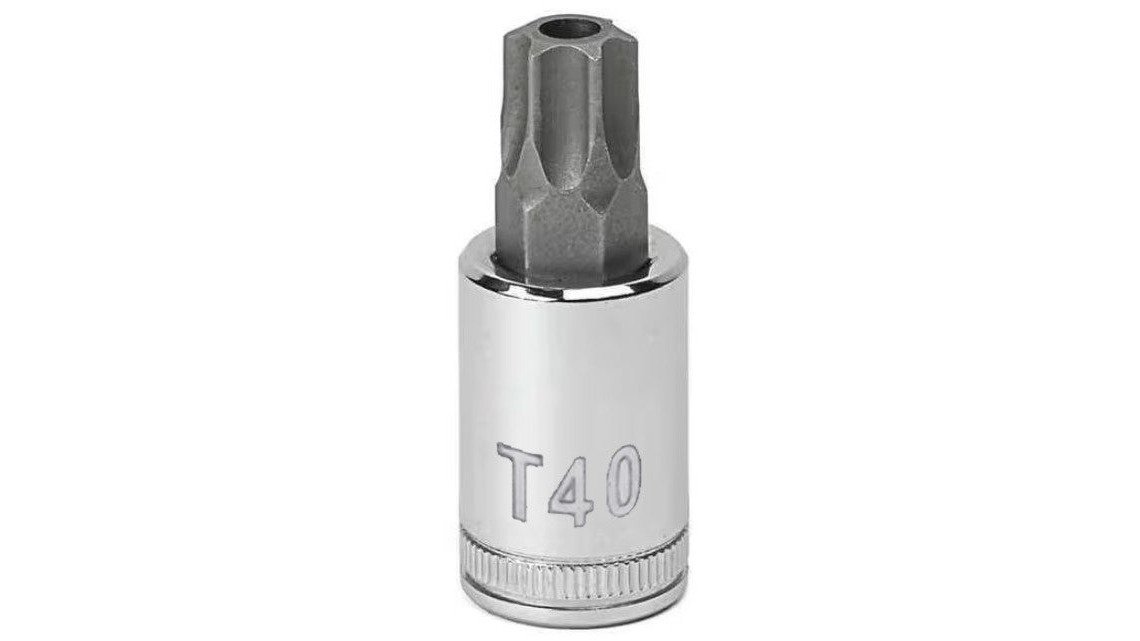
- Turn the center bolt with the tamper-proof Torx wrench until the cover is snug.
- Confirm the cover does not lift or rock under hand pressure.
- Log the drain location and the tool required for removal.
Authorized removal follows the same steps in reverse. The Guardian Drain Lock 2" tamper-proof bit socket is the tool for 2" locks; larger models take the matching Torx size.
Maintenance is minimal. Lift the cover at each scheduled cleaning, clear the debris it caught, rinse, and reseat. Check the bolt for corrosion and the base for wear at the same time.
Restroom drains often fail when a strainer is removed and nothing prevents it. If your facility is still relying on loose strainers, the fix is a locking cover, not another service call.
Frequently Asked Questions
How do tamper-resistant floor drain locks work?
The Guardian floor locks use a center bolt that secures the cover, and the Dome D-Lock expands its base as the bolt is turned. The bolt head requires a matching tamper-proof Torx bit, so staff cannot lift the cover without the tool. The Guardian Floor Drain-Lock Round, for example, needs a T-45 Tamperproof Torx tool to unlock the grate, and the Dome D-Lock expands its base as you turn the bolt. That single tool requirement is what separates a floor drain lock from a standard strainer anyone can lift.
How do you choose the right size floor drain lock?
Measure the drain opening, not the old cover. The Guardian Floor Drain-Lock Round and Square fit openings that measure 3.5 inches and replace covers made by Josam, JR Smith, and Zurn. The Dome D-Lock comes in 2-inch, 3-inch, and 4-inch sizes for floor sinks and mop basins. Ordering without measuring risks a 25% restocking fee on returns, so check the opening with a tape measure first and compare it to the product specs.
Can a floor drain lock be removed for cleaning?
Yes, but only with the correct tamper-proof bit. Keep the Torx tool with the maintenance supervisor rather than on the cleaning cart, so authorized staff can unlock the cover for scheduled cleaning while casual removal stays blocked. Guardian sells the 2-inch Tamper-Proof Bit Socket separately for $17.00. Build unlocking into your cleaning schedule, and the cover goes back on locked every time instead of disappearing into a utility closet.
What is the difference between a floor drain lock and a drain strainer?
A strainer sits loosely in the drain and catches debris, but anyone can lift it out, and a missing strainer lets trash flow straight into the P-trap. A floor drain lock is a strainer or grate that fastens to the drain body with a tamper-resistant bolt, so it keeps catching debris and stays put. Locked covers help block rags, bags, and food waste before they reach the pipe, which can reduce clogs and P-trap damage from cabling.
