

How to Connect a Grease Trap to Commercial Drainage
Last Updated: October 29, 2026
Quick Summary
A grease trap connects between the kitchen sink drain and the building drain, with the sink line feeding the inlet and the outlet leading to the sewer line. The inlet should sit higher than the outlet so gravity moves wastewater through, and the unit should be tested with running water before access covers are closed. Grease floats, solids settle, and only cleaner water leaves through the outlet.
- Connect the sink drain line to the trap inlet, then the trap outlet to the building drain.
- Set the inlet higher than the outlet so gravity moves water through the trap.
- Test the connection with running water before closing any access covers.
- Install a pre-strainer upstream of the trap to catch food scraps.
- Size the trap by calculating peak flow from every connected fixture and checking local code.
Table of Contents
Commercial kitchens send a steady stream of fats, oils and food solids down the drain. Without a barrier, that grease cools, hardens and clings to pipe walls until a line backs up. This guide walks through how to connect a grease trap to commercial drainage the right way.
A grease trap is a plumbing device that intercepts fats, oils and grease (FOG) before wastewater reaches the sewer. It slows the flow so grease floats, solids settle, and only cleaner water leaves through the outlet.
Here is the short version of how it works:
- Wastewater enters through the inlet from sinks and dishwashers.
- Grease rises to the top and is held back by a baffle.
- Solids sink to the bottom and collect in the chamber.
- Cleaner water exits through the outlet into the drain line.
A grease trap is not a substitute for drain strainers. Strainers catch food scraps at the sink. The trap catches what passes through the strainer.
Watch out: a trap that is undersized or set too close to a commercial dishwasher can let grease escape into the collection system. Guidance documents flag both conditions as common failure points.
The global grease-trap market was valued at about $2.8 billion according to Dataintelo's 2025 market report, which projects growth to $3.5 billion by 2034. That spending reflects how widely this equipment is now expected in food service. Dataintelo Grease Traps Market Size, Share & Forecast Report
Grease Trap Sizing Guide: Matching Capacity to Your Fixtures
Sizing decides whether a trap works at peak hours. An undersized unit fills fast, and grease carries over into the drain. The right size depends on the flow rate from every fixture connected to it.
Start with a short list of inputs:
- Total number of sinks, dishwashers and prep fixtures draining to the trap
- Peak flow rate in gallons per minute from each fixture
- Typical meal volume and hours of operation
- Local plumbing code requirements for your jurisdiction
Sizing is a calculation, not a guess. Plumbing codes set the method, and a licensed plumber or engineer should confirm the final number against your local code.
Step-by-Step: Connecting Sink Drains and Trap Inlet and Outlet
This is where the install happens. The sequence matters because it keeps wastewater moving in one direction through the trap.
- Confirm the trap sits level and is accessible for cleaning.
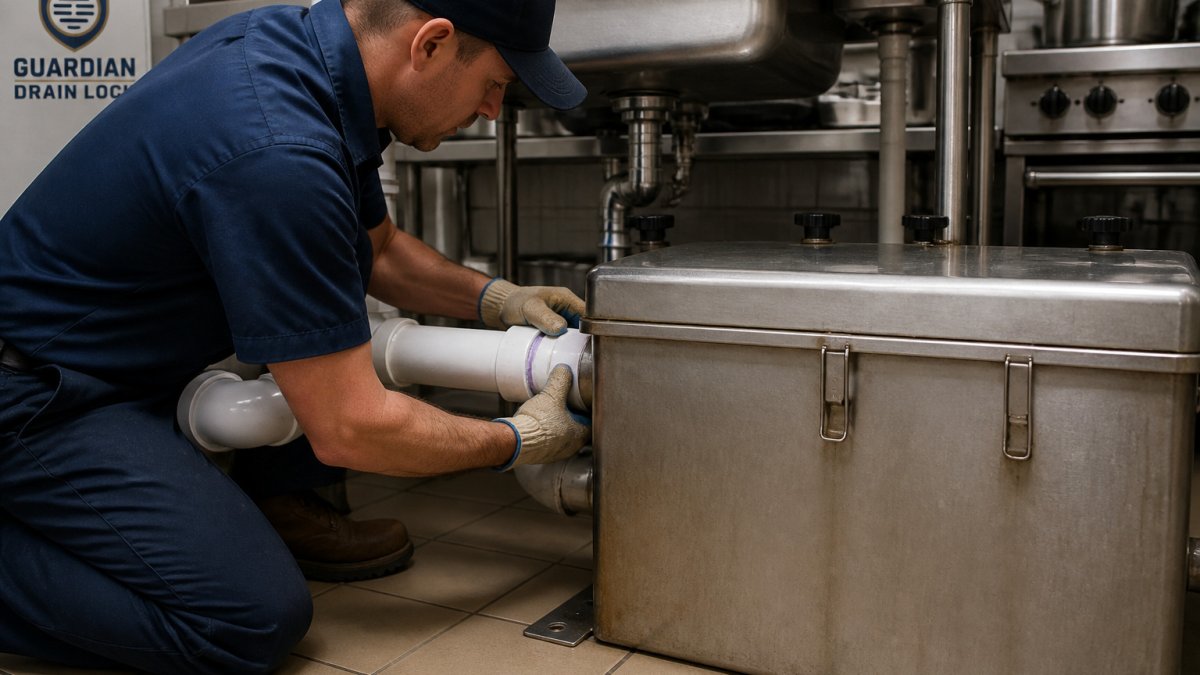
- Connect the sink drain line to the trap inlet.
- Connect the trap outlet to the building drain or sewer line.
- Check that the inlet sits higher than the outlet so gravity moves water through.
- Test with running water before closing any access covers.
Use the manufacturer's connection sizes and fittings.
Choosing Commercial Drain Strainers and Pre-Strainers
A pre-strainer sits upstream of the trap and catches food scraps before they reach it. It is the first line of defense and cuts down on how often the trap needs cleaning.
A strainer at every sink and floor drain that carries food waste is a sound practice.
Venting, Cleanouts, Access and Backflow Checks
Plan access from the start. Every trap needs a cleanout or access cover within reach, so the chamber can be pumped and inspected. Check that the vent keeps air moving so the trap drains freely. Confirm a backflow check is in place where the code requires one.
Grease Trap Installation Best Practices for Commercial Kitchens
Good installation is mostly planning. Place the trap where it can be reached without moving equipment. Keep it away from the dishwasher discharge when possible, since hot, greasy water can overwhelm a unit set too close.
Document the installation with photos and the sizing calculation. Inspectors and maintenance crews both rely on that record.
Commissioning and Inspection Checklist Before Use
Before the kitchen goes live, run through this list:
- Trap is level and secured
- Inlet and outlet connections are tight and leak-free
- Vent and cleanout are accessible
- Strainers are installed at all contributing sinks
- Water runs freely with no pooling at the inlet
- Sizing calculation is on file
Grease Trap Maintenance Schedule and Performance Monitoring
A trap needs regular pumping and cleaning. The right interval depends on volume, but a monthly check is a safe starting point for a busy kitchen, adjusted up or down based on what you find. Log each service so you can spot a trend before a backup happens.
For ongoing upkeep and clog prevention, see our practical guide on how to prevent commercial drain clogs. It covers the habits that keep both the trap and the drain line running.
Schedule Your Drain Protection Setup With Guardian Drain Lock
A grease trap and a drain lock can work together. The trap handles grease, and Guardian Drain Lock's tamper-resistant, pre-assembled designs help keep food waste and debris out of the drains that feed it. The stainless steel construction is built for demanding environments.
Pricing depends on quantity, drain count and delivery, so check Guardian Drain Lock's website for current prices or request a quote. Shop all drain locks to find the right fit for your facility.
Frequently Asked Questions
How do you connect a grease trap to a commercial drainage system?
Route the sink and floor drain lines to the trap inlet, and run the trap outlet to the building's sanitary drain on the downstream side. The inlet must sit above the outlet so wastewater flows by gravity, with fats and solids held in the trap while cooler water passes through. Use the trap manufacturer's connection diagram and confirm the arrangement with your local plumbing authority or inspector before backfilling or closing walls. Permit requirements vary by city and county, so check locally before work begins.
Which commercial sinks should drain through a grease trap?
Sinks that receive grease-laden wastewater should discharge through the trap, including pot sinks, prep sinks, three-compartment sinks and dishwasher drains where code requires it. Hand sinks and restroom fixtures typically do not drain through a grease trap. Your local plumbing code and the trap's rated flow determine the final list, so confirm the fixture schedule with your inspector before connecting.
How do you size a grease trap for a commercial kitchen?
Sizing is based on the total drainage fixture units or flow rate of the connected fixtures, the number of meals served, and the retention time the trap must provide. Many jurisdictions publish sizing tables or require a sizing calculation from a licensed plumber. Undersized traps let grease pass into the collection system, so do not select a unit by the sink size alone. Confirm the required gallon capacity and flow rating with your local authority.
How often should a commercial grease trap be cleaned?
Most commercial grease traps are pumped and cleaned on a schedule set by local code, often every one to three months, depending on the volume of grease and solids entering the trap. Keep a service log with dates, fat-and-solids depth measurements and the hauler's manifest. If the grease layer approaches the level set by your authority or the trap begins to back up, schedule service sooner. Pricing for pumping and cleaning depends on the service provider, volume and location, so request a quote from a local contractor.
