

Sump & Trap Cleaning: What You Need to Know
Table of Contents
- What Sump and Trap Cleaning Actually Does
- How to Clean Commercial Grease Traps Step by Step
- Grease Trap Maintenance Schedule: Frequency and Best Practices
- Commercial Grease Trap Cleaning Cost and Budget Planning
- Why Drain Protection Matters: Beyond Professional Cleaning
- Environmental Compliance and Regulatory Requirements
- Conclusion
- Frequently Asked Questions
Last Updated: September 4, 2026
Commercial kitchens generate fats, oils, and grease (FOG) that solidify in pipes, causing backups that shut down operations. Guardian Drain Lock has spent over 20 years helping restaurants, hospitals, and schools prevent these failures. This guide explains what professional sump and trap cleaning involves, how often you need it, what it costs, and how drain protection reduces maintenance frequency and total plumbing spend.
What Sump and Trap Cleaning Actually Does
Sump and trap cleaning removes accumulated FOG, sludge, and solid waste from grease interceptors and floor sink sumps. Professional services use vacuum trucks to extract contents, then scrape and pressure-wash interior walls to remove hardened residue that simple pumping leaves behind.
A pump-out removes liquid and loose solids, but grease adheres to tank walls and hardens into a layer that reduces interceptor capacity. Proper cleaning includes scraping walls and flushing the system. Without this deeper clean, your grease trap operates at reduced capacity and solids carry into drain lines, causing clogs.
How to Clean Commercial Grease Traps Step by Step
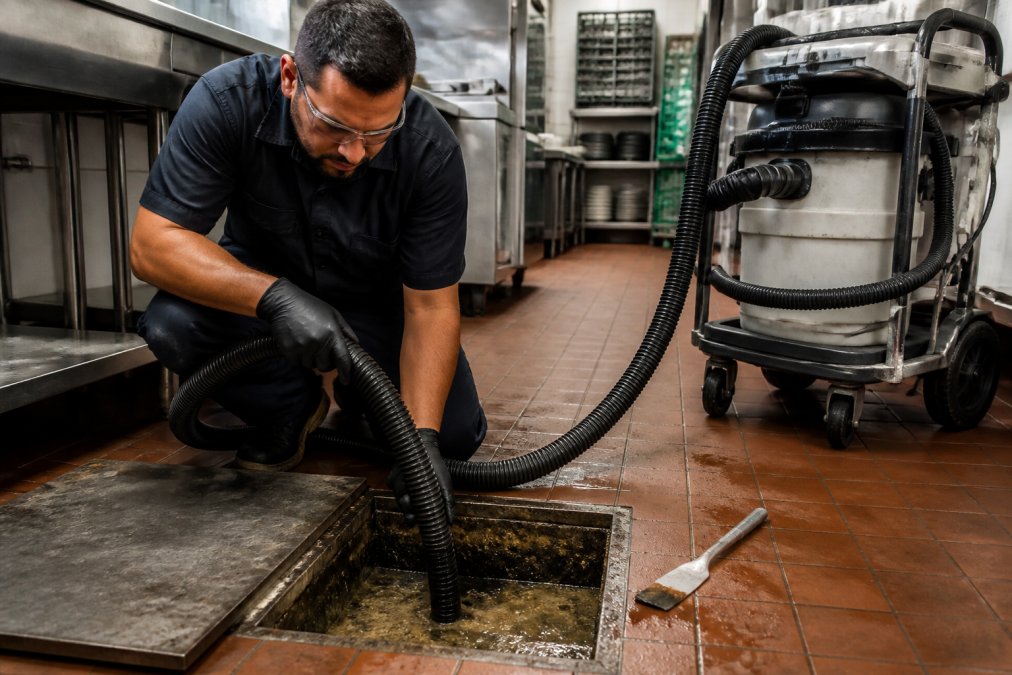
Cleaning a commercial grease trap follows a consistent sequence. Understanding the process helps you evaluate whether a service provider is doing thorough work. The steps below reflect the standard procedure.
Step 1: Pump Out Accumulated Grease and Solids
The technician measures the grease layer and settled solids, then uses a vacuum truck to extract all contents. Complete evacuation matters because leaving any layer behind means the trap refills faster and remaining material continues to decompose and emit odors.
Step 2: Inspect and Clean Interior Walls
After pumping, the technician scrapes interior walls, baffles, and pipes to remove hardened grease deposits. The technician should inspect baffles for cracks, check inlet and outlet tees for blockage, and verify structural soundness. Catching damage during cleaning prevents costly interceptor failure later.
Step 3: Flush and Dispose of Waste Properly
The final step involves pressure-washing the interior and flushing the system with water. The extracted waste is transported to a licensed disposal facility in compliance with local regulations. The technician must provide a waste manifest documenting proper disposal for your records.
Grease Trap Maintenance Schedule: Frequency and Best Practices
The maintenance schedule depends on kitchen volume and interceptor size. High-volume operations typically need monthly or six-week service, while lower-volume facilities can extend to quarterly intervals.
Track the FOG layer depth. When grease and solids reach 25 percent of the total liquid depth, it is time to pump. Pairing a consistent schedule with drain protection extends intervals between cleanings by reducing debris entering the interceptor.
| Kitchen Volume | Typical Cleaning Frequency | Key Trigger |
|---|---|---|
| High-volume (fast food, full service) | Every 30-45 days | FOG layer reaches 25% of liquid depth |
| Medium-volume (cafeteria, prep kitchen) | Every 60-90 days | Noticeable odor or slow drainage |
| Low-volume (deli, coffee shop) | Quarterly or bi-annual | Visual inspection shows solids buildup |
Commercial Grease Trap Cleaning Cost and Budget Planning
Most licensed waste haulers charge between $150 and $400 per service visit for a standard pump-out and disposal. Understanding the true financial picture requires comparing preventive maintenance cost against the cost of failure.
A preventive maintenance schedule typically costs $1,800 to $4,800 annually for a medium-volume kitchen. An after-hours emergency pump-out costs two to three times the standard rate ($600-$1,200) because of overtime labor. More critically, an emergency backup means lost revenue during downtime.
A restaurant losing kitchen access for two hours can lose $2,000 to $5,000 in revenue. Emergency plumbing repair adds $800 to $2,500. In worst-case scenarios, a sanitary sewer overflow triggers fines ($500-$10,000+) plus municipal cleanup costs billed to the property owner.
A facility spending $3,000 annually on scheduled cleaning avoids $3,000 to $8,000 emergency repairs, lost revenue, and fines. Facilities adding drain protection report extending intervals by 20 to 30 percent, delivering the same reliability with fewer service visits.
Request a detailed proposal including base trip fee, waste removal charge, wall scraping labor, pressure-washing, waste documentation, and compliance reporting. Compare on what is included, not price alone. A $250 pump-out omitting wall scraping requires service again in 4-6 weeks; a $350 service with full scraping may extend the interval to 8-10 weeks. Ask about annual contracts; most offer 10-15 percent discounts.
Why Drain Protection Matters: Beyond Professional Cleaning
Professional cleaning removes buildup, but does not stop debris from entering your system. Between cleanings, food waste, rags, and solids wash into floor sinks and travel toward the interceptor, where they block the inlet pipe or accumulate faster than scheduled cleaning can manage.
A physical barrier at the drain opening reduces the load on your grease trap and sewer lines. Floor sink baskets capture solids before they enter the P-trap. Locking drain covers prevent staff from removing the strainer, a common issue in busy kitchens.

Guardian Drain Lock offers the DUO 2-in-1 Floor Sink Basket - 9.5 inch Round and DUO 2-in-1 Floor Sink Basket - 8.5 inch Square at $42.37 each. These two-tier systems let you lift out the top basket for quick solids removal while the primary basket stays in place. Glass-filled polypropylene construction is durable for continuous commercial use and will not float.

For lockable solutions, the Guardian Drain-Lock Flat at $57.24 uses a tamper-proof Torx screw, and the Guardian Dome D-LOCK at $58.40 adds a cast aluminum dome that locks into the drain opening. These products prevent staff from removing strainers when they fill up.

Environmental Compliance and Regulatory Requirements
Grease trap management is a regulatory requirement enforced through municipal pretreatment programs under the EPA's National Pretreatment Program. Most municipalities require foodservice establishments, hospitals, schools, and industrial facilities to install and maintain grease interceptors and document maintenance in writing. Local environmental inspectors conduct unannounced inspections, request records, and issue violations or fines for non-compliance.
Your waste hauler must provide a waste manifest including the date of service, volume removed, disposal facility name and license number, and compliance certification. Keep records for a minimum of three years and produce them on demand during inspections. A facility that cannot produce records faces immediate violations, even if the grease trap is functioning properly.
Many municipalities require digital compliance reporting through online portals, with automatic notifications when service is due or overdue. A missed cleaning appointment is not just an operational risk; it is a compliance risk that can trigger an inspection visit.
First violations result in a notice and 30-day compliance deadline. Typical fines range from $500-$2,000 for first offenses and $1,000-$5,000+ for repeat violations. A facility causing a sanitary sewer overflow faces fines of $10,000-$50,000+ plus liability for municipal cleanup costs, which can exceed $100,000.
Grease trap waste is classified as non-hazardous industrial waste in most jurisdictions, but may contain food solids, cleaning chemicals, or other materials requiring special handling. If your facility uses degreasers or sanitizers, those chemicals travel into your grease trap. The disposal facility must analyze the waste to confirm it does not contain hazardous materials. If hazardous materials are present, disposal costs significantly more and requires additional manifesting.
A licensed waste hauler is trained to recognize hazardous materials, classify waste correctly, and route it to the appropriate facility. They maintain chain of custody documentation that protects your facility from liability. Unlicensed disposal or pouring waste down the drain faces environmental violations and potential criminal liability.
Several states and municipalities have adopted stricter FOG control standards. Some jurisdictions require automated grease trap monitoring systems that alert the facility and local agency when the grease layer reaches a threshold. Others mandate drain protection devices to prevent solids from entering the grease trap. These regulations recognize that prevention, stopping debris before it reaches the interceptor, is the most cost-effective compliance strategy.
Establish a preventive maintenance schedule based on your facility's FOG generation rate, document every service visit with a waste manifest, keep records organized and accessible, and verify your waste hauler is properly licensed and insured. Request an annual compliance summary showing service dates, volumes removed, and disposal certifications. This documentation is your defense in an audit and proof of good-faith compliance effort.
Conclusion
Professional sump and trap cleaning is essential for compliant, efficient commercial kitchens. A consistent, documented maintenance schedule keeps you compliant with environmental regulators. Pairing that schedule with physical drain protection reduces debris entering your system, extends intervals between pump-outs, and prevents emergency clogs.
Facilities that control maintenance costs stop debris before it reaches the pipes. Guardian Drain Lock's tamper-resistant floor sink baskets and locking drain covers are pre-assembled, easy to install, and built from stainless steel and glass-filled polypropylene. With over 20 years of industry experience, our products reduce costly plumbing expenses and minimize operational downtime.
Frequently Asked Questions
How often should commercial grease traps be cleaned?
Most commercial facilities need grease trap cleaning every 1 to 3 months, depending on volume and usage. High-volume restaurants and food processing plants may require monthly service or more frequent pumping. Facilities with lower grease output can often extend intervals to quarterly cleaning. The key is monitoring accumulation rates and following local health department guidelines, which typically mandate regular maintenance to prevent overflow and environmental violations.
What is the difference between a sump pump and a grease trap?
A sump pump removes water and liquid from a pit or basin and discharges it away from your facility. A grease trap (or interceptor) captures fats, oils, and grease (FOG) before they enter municipal sewer lines, preventing clogs and environmental damage. While both protect plumbing systems, grease traps specifically handle FOG separation and require regular sludge removal, whereas sump pumps handle water management. Many commercial kitchens use both systems working together.
What's included in professional sump and trap cleaning?
Professional sump and trap cleaning includes pumping out accumulated sludge and grease, inspecting interior surfaces for damage, scrubbing walls and baffles, flushing lines with hydro-jetting when needed, and proper disposal of waste at licensed facilities. Technicians also check for leaks, damaged baffles, and compliance documentation. This comprehensive approach prevents backups, reduces emergency service calls, and ensures your system meets environmental regulations. It's far more thorough than basic strainer maintenance alone.
How can I reduce sump and trap cleaning frequency and costs?
Install drain protection devices like tamper-resistant drain locks and floor sink baskets to prevent debris from entering your system in the first place. The Guardian Dome D-LOCK ($58.40) and DUO 2-in-1 Floor Sink Baskets ($42.37) filter solids before they accumulate in traps, extending intervals between professional cleanings. Train staff to dispose of grease properly and use strainers consistently. When fewer solids reach your grease trap, you'll need less frequent pumping, cutting both service calls and disposal costs significantly over time.